When planning a solar system for your Auckland or Waikato home, one of the crucial decisions you will face is whether to install batteries immediately or start with a grid-tied solar panel array. Both approaches offer clear benefits, but understanding how your household uses energy throughout the day will help you choose the right configuration.
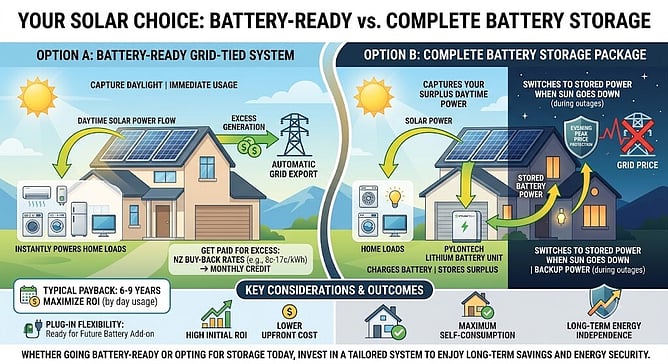
A battery-ready grid-tied system is the most cost-effective way to start. Your rooftop panels capture daylight and immediately power whatever is running in your home, such as heat pumps, washing machines, fridge units, and home offices. Any excess electricity your system produces during peak daytime hours is automatically exported back to the national grid. New Zealand electricity retailers pay buy-back rates generally ranging between 8c and 17c per kilowatt-hour, which shows up as a credit on your monthly bill.
For households where someone is home during the day, or for families who can schedule appliances to run during peak sunlight, a battery-ready panel setup delivers an impressive return on investment with a payback period between 6 and 9 years. Because the system is built battery-ready, you retain the flexibility to plug in lithium storage later as your budget allows or as energy habits change.
On the other hand, adding a battery storage system like a Pylontech lithium unit changes the dynamic by capturing your surplus daytime solar power instead of sending it back to the grid. When the sun goes down and evening power rates kick in, your home switches to stored battery power. This maximizes your self-consumption, protects your household against evening peak power prices, and can provide backup energy during unexpected local grid outages.
If your family uses the majority of its electricity early in the morning and late in the evening, pairing your panels with battery storage ensures none of your green generation goes to waste. Whether you choose to go battery-ready today or opt for a complete storage package from day one, investing in a tailored solar system guarantees long-term energy independence and protection against rising power prices.